


Why World Cup Experience May Matter Less in 2026 Than Ever Before
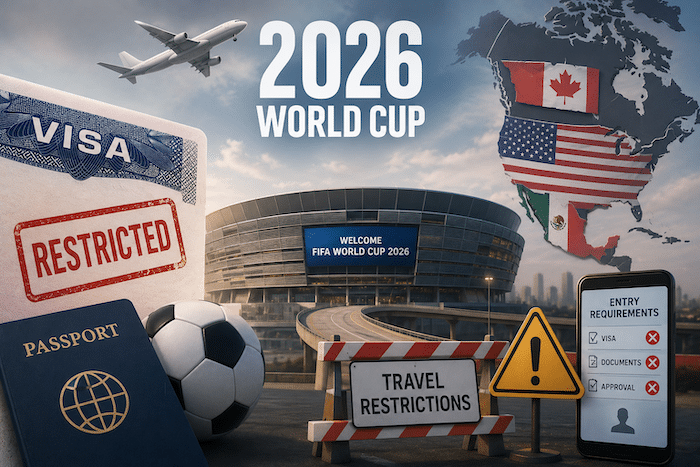
For decades, experience of World Cups has been considered one of football’s most precious commodities.
Tournament favorites often refer to Brazil, Germany, Argentina, Italy, France and others as analysed by experts. These nations have generations of experience dealing with football’s biggest stage. They know the pressure, expectation and unique demands of competing for the most prestigious trophy in sport.
However, with the 2026 FIFA World Cup on the horizon, there may be expanding evidence that experience might not matter anymore.
The level of play will be completely different to previous tournaments. The need to navigate an expanded field of 48 teams, matches spread across three host nations, enormous travel distances, and growing visa and entry restrictions are challenges that even the most advanced football countries have never encountered.
TAs a result, many football prediction experts believe adaptability could become a more important factor than historical World Cup pedigree. In a competition shaped by logistical challenges as much as on-field quality, the teams that respond best to changing conditions may hold a greater advantage than those relying solely on decades of tournament experience.
Experience Has Traditionally Been a Competitive Advantage
World Cup football differs from football played within the clubs.
The stakes are higher, preparation time is limited and even minor mistakes have huge costs. Countries that consistently progress to the latter stages gain access to a form of knowledge that cannot be taught.
Players learn to manage expectations. Coaches become comfortable with the rhythms of tournaments. Football federations know how to deliver the logistics of success.
In the past, the incumbents have benefitted from such advantages.
However, the situation in 2026 is expected to diminish some of those advantages.
The United States Is Hosting a Unique World Cup
The upcoming 2026 World Cup will have most matches hosted in the United States, making it the focus of the tournament.
Unlike the previous World Cups hosted in relatively small regions, teams might have to travel extensively between stadiums. Some journeys will take thousands of miles and many time zones.
Logistics difficulties on this scale have rarely happened to nations with World Cup experience.
Preparation and recovery might become as critical as tactical decision making.
A less experienced World Cup team with superior adaptation strategies can still measure up to a traditional giant of the game.
Visa Concerns Have Become a Major Talking Point
In the weeks leading up to the tournament, visas and entry have been one of the most hotly debated issues.
Football supporters, officials, journalist and other football individuals have faced questions on their ability to arrive in the United States.
The problem attracted attention after some reports of issues with visas for people associated with international football.
As to the preparations, FIFA and the authorities of the host continue to ensure things stay seamless. Most teams now must consider the reality.
The off-field administrative factors have first time become a big part of the planning for the tournament before the kick-off in modern World Cup history.
Fans Could Influence the Tournament in Unexpected Ways
The role of supporters has always been critical in World Cup football.
From the fervent fans of Argentina to the astonishing following of Morocco in Qatar, the presence of fans can seriously affect the ambience of a team.
Supporters from certain countries may face restrictions on travel or entry, while visa delays may hinder attendance at matches.
Some countries may find it difficult to bring many fans to North America, so maybe we need to rethink the old assumptions about crowds.
This could create unfamiliar environments for teams that usually depend on solid backing during significant events.
Referees and Officials Face Similar Challenges
It goes further than players and fans.
The World Cup is not just the players but also the referees, officials, media and tournament staff. Travel document issues or entry problems would have the potential to cause disruption that previous editions managed to avoid.
Astute football nations may be aware of tournament football but can’t rely on the last one for every obstacle that lies in wait in 2026. The setting is just different.
Adaptability May Become the Most Valuable Asset
One reason many fans believe World Cup experience could matter less in 2026 is that modern football has become increasingly global.
Today’s players compete across Europe, Asia, North America, and the Middle East. They regularly adjust to different cultures, climates, time zones, and competitive environments.
As a result, adaptability has become a core skill for elite footballers.
The teams most likely to thrive in 2026 may not necessarily be those with the most World Cup appearances. Instead, success could belong to nations capable of handling uncertainty, managing logistics efficiently, and maintaining focus despite external distractions.
What This Means for Football Predictions
The unusual situation in which the tournament takes place poses new problems for analysts and models.
Conventional approaches broadly rely on World Cup outcome or performer history. However, the 2026 one has factors from which previous tournaments cannot learn much.
The impact of travel demands, crowd dynamics, logistical planning and external administrative factors can lead outcomes to diverge from historical data.
Many of the modern football prediction analysis platforms are gradually making all-encompassing factors an integral part of their analysis rather than just past tournaments.
A Tournament Unlike Any Other
The FIFA World Cup 2026 will be one of the most interesting tournaments in soccer ever.
The new format ensures fresh tales along with novel experiences. With the added complexities of hosting a global event like this across Canada, the U.S., and Mexico, the tournament could challenge many long-held beliefs about what it takes to succeed on the biggest football stage.
Experience will always matter.
But for the first time in a while, it may not be the winning factor.
The adaptability could be much more fusible than the history itself in a World Cup which is all about travel requirement, administration, and logistics.



![The Blacklist Season 9 Episode 4 [S09E04] Subtitles](https://i2.wp.com/www9.stagatv.com/wp-content/uploads/2026/04/1776585507-7696-cjXLrg4R7FRPFafvuQ3SSznQOd9.jpg?resize=60,90 "The Blacklist Season 9 Episode 4 [S09E04] Subtitles")
![The Blacklist Season 9 Episode 4 [S09E04] Subtitles](https://i3.wp.com/www9.stagatv.com/wp-content/uploads/2026/06/1782105462-9142-7V0Ebks0GgpKvQ7QbLAIdX5dos4.jpg?resize=60,90 "The Blacklist Season 9 Episode 4 [S09E04] Subtitles")
![The Blacklist Season 9 Episode 4 [S09E04] Subtitles](https://i1.wp.com/www9.stagatv.com/wp-content/uploads/2026/06/1781255748-5296-44dDRL0E3BqxFW8qje9Ilkv0iv7.jpg?resize=60,90 "The Blacklist Season 9 Episode 4 [S09E04] Subtitles")
![The Blacklist Season 9 Episode 4 [S09E04] Subtitles](https://i1.wp.com/www9.stagatv.com/wp-content/uploads/2026/06/1782374565-7195-lzZpWEaqzP0qVA5nkCc5ASbNcSy.jpg?resize=60,90 "The Blacklist Season 9 Episode 4 [S09E04] Subtitles")
![The Blacklist Season 9 Episode 4 [S09E04] Subtitles](https://i0.wp.com/www9.stagatv.com/wp-content/uploads/2026/06/1782223272-5924-awm0GzYGa1uVAccRqHzNLAcRUZm.jpg?resize=60,90 "The Blacklist Season 9 Episode 4 [S09E04] Subtitles")
![The Blacklist Season 9 Episode 4 [S09E04] Subtitles](https://i1.wp.com/www9.stagatv.com/wp-content/uploads/2026/06/1782553292-7404-4FMDkmMBIxk1YM8Qo4GThmjX7MJ.jpg?resize=60,90 "The Blacklist Season 9 Episode 4 [S09E04] Subtitles")
![The Blacklist Season 9 Episode 4 [S09E04] Subtitles](https://i0.wp.com/www9.stagatv.com/wp-content/uploads/2026/05/1779689456-7615-WGRQ8FpjkDTzivQJ43t94bOuY0.jpg?resize=60,90 "The Blacklist Season 9 Episode 4 [S09E04] Subtitles")
![The Blacklist Season 9 Episode 4 [S09E04] Subtitles](https://i2.wp.com/www9.stagatv.com/wp-content/uploads/2026/05/1778848232-3530-xsiecCxd8lkcAluw0wWwbW5CwSv.jpg?resize=60,90 "The Blacklist Season 9 Episode 4 [S09E04] Subtitles")
![The Blacklist Season 9 Episode 4 [S09E04] Subtitles](https://i2.wp.com/www9.stagatv.com/wp-content/uploads/2026/06/1782463114-1554-hIJpXb7Xaje2mebN9ylsS7blQzP.jpg?resize=60,90 "The Blacklist Season 9 Episode 4 [S09E04] Subtitles")
![The Blacklist Season 9 Episode 4 [S09E04] Subtitles](https://i1.wp.com/www9.stagatv.com/wp-content/uploads/2026/06/1782206480-2172-kyM60vcgf7lfofmZB4F5Rj7OrHW.jpg?resize=60,90 "The Blacklist Season 9 Episode 4 [S09E04] Subtitles")
![The Blacklist Season 9 Episode 4 [S09E04] Subtitles](https://i2.wp.com/www9.stagatv.com/wp-content/uploads/2026/06/1780654713-9705-eiVvE3ax5BRoTOihqc591e2IJT9.jpg?resize=60,90 "The Blacklist Season 9 Episode 4 [S09E04] Subtitles")
![The Blacklist Season 9 Episode 4 [S09E04] Subtitles](https://i1.wp.com/www9.stagatv.com/wp-content/uploads/2026/06/1780919941-8836-zm0KAbOjlt9eR5y7vDiL2dEOwMl.jpg?resize=60,90 "The Blacklist Season 9 Episode 4 [S09E04] Subtitles")
![The Blacklist Season 9 Episode 4 [S09E04] Subtitles](https://i0.wp.com/www9.stagatv.com/wp-content/uploads/2026/06/1780657579-1035-pK6tGCG6UAgUT5FTq3ylGErHxQQ.jpg?resize=60,90 "The Blacklist Season 9 Episode 4 [S09E04] Subtitles")
![The Blacklist Season 9 Episode 4 [S09E04] Subtitles](https://i3.wp.com/www9.stagatv.com/wp-content/uploads/2026/06/1781202331-7528-AbunjMKX4P1sDNlKfhYrWkIoRD9.jpg?resize=60,90 "The Blacklist Season 9 Episode 4 [S09E04] Subtitles")
![The Blacklist Season 9 Episode 4 [S09E04] Subtitles](https://i3.wp.com/www9.stagatv.com/wp-content/uploads/2022/08/1661052326-3082-z2yahl2uefxDCl0nogcRBstwruJ.jpg?resize=60,90 "The Blacklist Season 9 Episode 4 [S09E04] Subtitles")
![The Blacklist Season 9 Episode 4 [S09E04] Subtitles](https://i1.wp.com/www9.stagatv.com/wp-content/uploads/2022/11/1669212647-7688-z7TQV2AwI2bLYyQ68QHxfAPfaJZ.jpg?resize=60,90 "The Blacklist Season 9 Episode 4 [S09E04] Subtitles")
![The Blacklist Season 9 Episode 4 [S09E04] Subtitles](https://i3.wp.com/www9.stagatv.com/wp-content/uploads/2025/06/1751014339-2527-1QdXdRYfktUSONkl1oD5gc6Be0s.jpg?resize=60,90 "The Blacklist Season 9 Episode 4 [S09E04] Subtitles")
![The Blacklist Season 9 Episode 4 [S09E04] Subtitles](https://i2.wp.com/www9.stagatv.com/wp-content/uploads/2024/12/1735215828-3425-dDlEmu3EZ0Pgg93K2SVNLCjCSvE.jpg?resize=60,90 "The Blacklist Season 9 Episode 4 [S09E04] Subtitles")
![The Blacklist Season 9 Episode 4 [S09E04] Subtitles](https://i3.wp.com/www9.stagatv.com/wp-content/uploads/2024/06/1717742096-8736-8rbxvwGpPd9MWjdhAoSBj016cns.jpg?resize=60,90 "The Blacklist Season 9 Episode 4 [S09E04] Subtitles")
![The Blacklist Season 9 Episode 4 [S09E04] Subtitles](https://i0.wp.com/www9.stagatv.com/wp-content/uploads/2025/02/1738832964-1752-dMOpdkrDC5dQxqNydgKxXjBKyAc.jpg?resize=60,90 "The Blacklist Season 9 Episode 4 [S09E04] Subtitles")
![The Blacklist Season 9 Episode 4 [S09E04] Subtitles](https://i1.wp.com/www9.stagatv.com/wp-content/uploads/2024/11/1731043970-4433-8j2l85HvDw0Z3UAc5f1OKDbIzhD.jpg?resize=60,90 "The Blacklist Season 9 Episode 4 [S09E04] Subtitles")
![The Blacklist Season 9 Episode 4 [S09E04] Subtitles](https://i2.wp.com/www9.stagatv.com/wp-content/uploads/2025/01/1736075828-5333-geCRueV3ElhRTr0xtJuEWJt6dJ1.jpg?resize=60,90 "The Blacklist Season 9 Episode 4 [S09E04] Subtitles")
![The Blacklist Season 9 Episode 4 [S09E04] Subtitles](https://www9.stagatv.com/wp-content/uploads/2023/09/Power-Book-IV-Force-season-2.webp "The Blacklist Season 9 Episode 4 [S09E04] Subtitles")
![The Blacklist Season 9 Episode 4 [S09E04] Subtitles](https://i0.wp.com/www9.stagatv.com/wp-content/uploads/2025/01/1737628195-7214-xjsx6rGEgHl2tUqkimo6Bz2KzVo.jpg?resize=60,90 "The Blacklist Season 9 Episode 4 [S09E04] Subtitles")
Comment